Hangzhou Zenius New Energy Co., Ltd.
-
+86 158-8822-2598









Outdoor Drinking Fountains and Bottle Filling Stations: A Specifier’s Guide
What an outdoor drinking fountain has to deliver
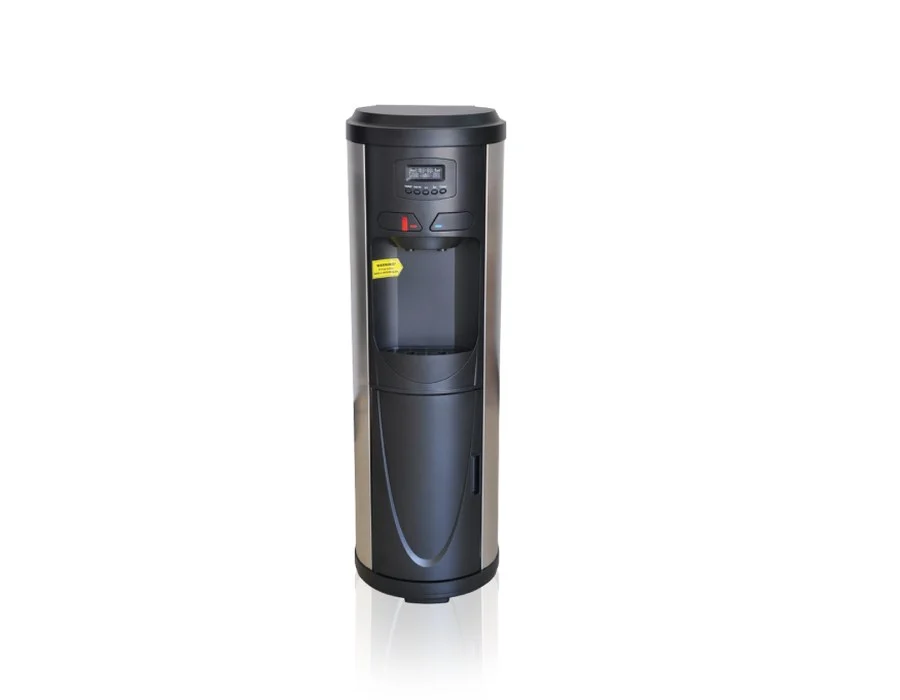
An outdoor drinking fountain is a permanently plumbed fixture that puts potable water where people actually are, replacing bottled water logistics in parks, schoolyards, transit platforms and factory yards. Typical buyers are municipal parks departments, school district facility managers, transit authorities and hospitality groups. The most common specification error is sizing by headcount: 800 students do not draw 800 drinks per hour, they draw a large share of them inside two or three short breaks. Size the fixture for that peak.
The second recurring error is treating an outdoor unit as an indoor unit placed outside. Water supply, drainage, freeze exposure and resistance to misuse all change once the enclosure sits in weather and within public reach.
- How the three outdoor fixture formats differ and which site type each suits
- How to size taps and cooling capacity against peak demand rather than headcount
- What to confirm on water, drain, power and winter shutdown before ordering
Three formats: fountain, platform and bottle filling station

Pedestal drinking fountain. A freestanding column with a bubbler and a swan-neck tap, for scattered low to moderate traffic. The YLR-600E is this format, with a 0.8 mm SS304 body and a choice of wall-mounted or floor-standing installation on adjustable feet. The cost is throughput: one person at a time, cold water only.
Bottle filling station. The dispense point is raised and sensor-operated, so a bottle or flask fills hands-free with no lip contact. The YL-600S is this format, with a composite lead-reduction filter, silver-ion sanitation at the outlet zone and side access for cartridge changes. It does not serve someone without a bottle unless a bubbler is added. On accessible routes the dispense height can be set to the project requirement.
Drinking water platform. A long body carrying several push taps over one continuous basin, for populations released at the same moment. The YLR-400 is this format, in SUS304 with a tabletop pitched 1–2° so water does not pool, in 2, 3 or 4 tap layouts at 1300, 1800 or 2300 mm. The cost is footprint and civils work.
| Model | Applies to | Key figures | Tradeoff |
|---|---|---|---|
| YLR-600G | Parks, grounds | Cold only, 10/20/30 L/H, 120 W | No hot water |
| YLR-600E | Hotels, pools | Cold only, to 30 L/H, R134a | One user at a time |
| YLR-400 | Canteens, campuses | 2/3/4 push taps, SUS304 1.2–2 mm | Needs prepared base |
| YLR-300 | Schools, campuses | UF or RO, 2–15 °C, 93 °C hot, 3 kW | Options fixed at order |
| YLB-600B | Staff rooms, canteens | 10 L/H at 92 °C, 20 L/H at 5–10 °C | Two circuits to wire |
| YL-600S | Schools, transit | Sensor dispense, 30 L/H | Serves bottle carriers |
Read the format column before the capacity column.
Six steps to specify the right outdoor unit
- Step 1 — Count taps from the peak window, not from headcount. Identify the intervals when people are released at once, such as a 15-minute recess or a 10-minute shift change, and budget one tap per 30 to 40 users within that window. Confirm the figure on site. The public school district project spreads taps across the busiest yard instead of clustering them.
- Step 2 — Decide between cold only and hot and cold. Cold only is simpler to wire and maintain. Both the YLR-600G and the YLR-600E are cold only. Where hot water is also wanted, the YLB-600B supplies 10 L/H at 92 °C alongside 20 L/H at 5–10 °C, drawing 800 W and 200 W from separate circuits.
- Step 3 — Choose UF or RO from a water report. UF holds back suspended solids, turbidity and microorganisms and needs no line for concentrate. RO also reduces dissolved solids, which decides it where TDS is high or the supply is brackish, but the concentrate needs a drain. The YLR-300 is offered with either.
- Step 4 — Confirm pressure at the tap-off point. Outdoor fixtures often sit at the end of long runs, so the reading at the meter is not the reading at the unit. The YLB-600B is rated for 0.07–0.5 MPa on municipal supply.
- Step 5 — Match cooling capacity to the busiest hour. The L/H figure describes continuous output, not storage. Choosing 10, 20 or 30 L/H changes how fast the tank recovers between bursts; the 5 L cold tank covers short peaks.
- Step 6 — Fix safety and public-realm details at quotation. Rounded corners, concealed pipework, anti-spill basin geometry and tamper-resistant fixings cannot be added after the body is formed.
Installation, hygiene and the maintenance year
Four services are needed, and three are usually underestimated. Water: a dedicated isolation valve on municipal supply. Drain: a trapped connection sized for basin discharge and, on RO builds, for concentrate; a pedestal site without a drain is a common reason to relocate the fixture. Power: an outdoor-rated circuit with residual current protection, with heater circuits sized separately, 3 kW on the YLR-300 hot water option and 800 W on the YLB-600B hot tank. Air: condenser units need clearance to reject heat.
Hygiene work concentrates on contact surfaces. The bubbler, tap spout and basin are where biofilm forms, and they are also the parts a cleaning team can reach. A practical regime is a daily wipe of touch surfaces, periodic descaling, and filter replacement driven by water quality and volume consumed rather than a fixed calendar interval.
Where hot water is provided outdoors, 92 °C on the YLB-600B and 93 °C on the YLR-300 are genuine scald risks. Pressure-reducing taps limit the initial surge, and a lock-out on the hot control prevents casual activation.
Winter is the failure mode that costs the most. Water left in a cold tank, concealed pipework or the basin trap expands as it freezes and will split the tank body or the evaporator. On sites with sub-zero periods, plan supply isolation and drain-down at design stage, and choose between year-round operation with protection and seasonal shutdown. On RO builds, drain the concentrate line too.
What to settle before an OEM or ODM order
- Voltage, frequency and plug. The outdoor range is supplied for 110–120 V/60 Hz or 220–240 V/50 Hz markets; the YLR-600G and YL-600S are offered at 110/220 V. Confirm plug pattern and cord length for the destination.
- Capacity and tap count per destination. Cold capacity is selectable at 10, 20 or 30 L/H, and platforms are built with 2, 3 or 4 taps. Fix these per destination.
- Finish, panel and branding. SUS304 brushed bodies, mirror or matte options, panel color, logo position and nameplate content are all fixed before production.
- Structure and installation method. Pedestal or wall-mounted, adjustable feet, basin geometry, and tabletop height to line up with adjacent counters.
- Loading and landed cost. The YLR-600E loads 196 units in a 20 ft container and 406 in a 40 ft; the YLB-600B loads 360 in a 40 ft.
- Handover documentation. Manual language, wiring diagram, spare parts list and filter specification belong on the purchase order.
Outdoor drinking fountains and bottle filling stations — frequently asked questions
Should a school choose a drinking fountain or a bottle filling station?
Base it on how pupils arrive at the break. Where most carry a bottle, a bottle filling station clears the queue faster, with no bubbler contact and no cups, and the counter gives the facility team a usage figure. Where they arrive without bottles, keep a bubbler.
Do we need RO filtration on an outdoor drinking fountain?
Decide from a water report for the site. UF is sufficient where municipal water is low in dissolved solids and turbidity: it holds back particles and microorganisms and needs no drain for concentrate. RO is the choice where TDS is high.
What happens to an outdoor drinking fountain in winter?
Freezing is the most expensive outdoor failure mode. Water left in a cold tank, concealed pipework or the basin trap expands as it freezes and will split the tank body or the evaporator. Plan supply isolation and drain-down at design stage.
How many taps does a school or a factory actually need?
Count against the release window rather than total population. A 10 to 15 minute break is the real constraint, and a rule of thumb is one tap per 30 to 40 users within that window. Three or four taps serves roughly 600 students.
Can one outdoor unit supply hot water as well as chilled water?
Only if the model is built for it. Most outdoor units, including the YLR-600G and YLR-600E, are cold only by design. The YLB-600B supplies 10 L/H at 92 °C alongside 20 L/H at 5–10 °C, drawing 800 W and 200 W.
How often should the filters on an outdoor unit be changed?
Replacement follows water quality and volume drawn, not a fixed interval, because two sites running the same model can differ widely. Treat an LED filter-life indicator as the prompt to reorder the cartridge, and put its specification on the purchase order.