Hangzhou Zenius New Energy Co., Ltd.
-
+86 158-8822-2598










Island Drinking Water: An AWG Alternative to Seawater Desalination
ISLAND RESORTS · DRINKING-WATER SOLUTIONS
Give guests a fresh-tasting drinking-water choice, produced on the island. A ZENIUS atmospheric water generator (AWG) collects moisture from ambient air and treats the collected water for its intended use. In suitable warm, humid conditions, it can replace part or all of a resort’s desalination-derived drinking-water supply.
Start with the drinking-water requirement
Keep the project focused on guest rooms, refill stations and other agreed drinking-water uses. Where desalination already serves showers, laundry, gardens or pools, a dedicated AWG line can operate alongside it. Replacing the resort’s entire water system needs a separate demand, climate and cost assessment.
A fresh-tasting alternative for your guests
A memorable drinking-water experience depends on more than the water source. Desalinated water is commonly remineralised; its final taste depends on mineral balance and treatment. Ofwat
Specify the AWG filtration, any mineralisation option, storage and dispensing arrangement before ordering. Ask ZENIUS to confirm the configuration available for the selected model. Compare samples at the same temperature with your current desalinated water and bottled-water reference; invite the people who will actually drink it to take part.
Agree the preferred taste and check water quality against local requirements. A good taste does not, by itself, demonstrate drinking-water safety. WHO
A dedicated drinking-water line without a seawater intake
This plan focuses on the guest drinking-water circuit. For energy units, full-system costs and technology selection, read our AWG vs seawater desalination technical comparison.
Desalination brine can affect marine ecosystems if poorly managed. An AWG drinking-water line avoids generating that seawater concentrate; overall environmental performance still depends on electricity, consumables and maintenance. UNEP
A practical island-resort layout
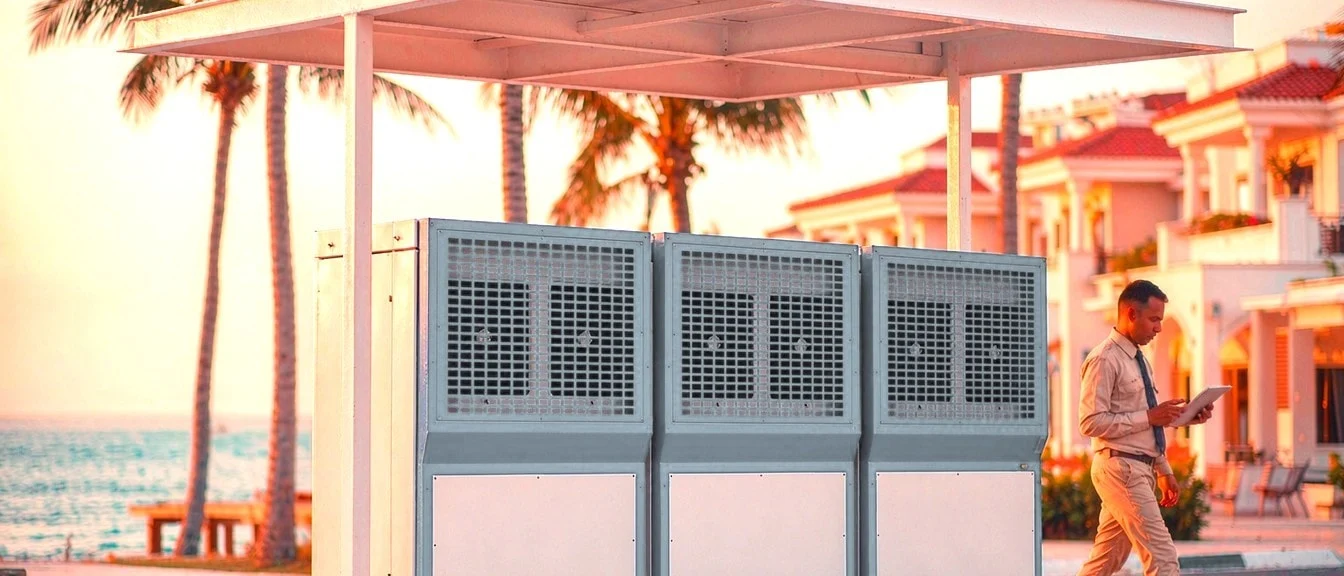
1. Generate outdoors: choose a ventilated service area with clean air, service access and suitable protection from salt spray. Confirm the exact model’s coastal corrosion protection rather than assuming marine suitability.
2. Treat and store: agree the treatment stages, hygienic water-contact materials, storage volume, cleaning procedure and any mineralisation option. Keep drinking-water plumbing identified and protected against cross-connections.
3. Distribute to guests: connect the agreed supply to refill points or a dedicated drinking-water circuit. Confirm dispensing hygiene, routine sampling, operator training and a backup water source.
Size for demand and the island’s least favourable season
Illustrative planning example, not a delivered project: 80 guests plus 20 staff equals 100 people. An assumed drinking-water allowance of 3 L per person per day gives 300 L/day. This is a project-planning assumption, not a universal drinking recommendation; replace it with your occupancy and consumption records, and add the separately agreed kitchen or dispensing demand.
Daily water production depends strongly on air temperature and humidity. Use seasonal site data and model-specific output curves; a nameplate capacity is not a year-round delivery guarantee. US EPA
Confirm peak draw-off, storage recovery, maintenance downtime, electrical supply and backup arrangements before selecting a model. Compare AWG models
Compare operating cost at the drinking point
Calculate measured kWh per usable litre = total system electricity ÷ water actually available for use. Include production equipment, water treatment, pumps and dispensing where relevant. Compare electricity at the same tariff and include filters, cleaning, testing, labour, maintenance and annualised equipment cost.
Do not assume that water from air is automatically cheaper or uses less energy than desalination. Atmospheric water harvesting involves a climate-dependent trade-off between yield and energy. Rao et al. (2022)
Compare against your actual delivered drinking-water cost, including any polishing treatment, bottling or purchased water logistics. AWG electricity consumption Cost per litre
Move from a concept to a purchase decision
Send ZENIUS your island location, monthly temperature and humidity, occupied rooms and staff count, daily drinking-water demand, electricity tariff and current water cost. Add photographs of the proposed installation area and your power and dispensing requirements. Request a model-specific proposal with the selected configuration, expected site-condition output, documents, maintenance scope and a sample or pilot acceptance plan.
Questions island-resort buyers ask
Can an AWG replace an existing desalination plant?
It may replace the drinking-water portion in suitable conditions. Replacing showers, laundry, irrigation and other bulk uses requires a separate whole-site assessment. A hybrid arrangement can keep desalination for general water while an AWG supplies drinking water.
Will water from air taste better?
The aim is a fresh-tasting option your guests prefer. Compare the actual configured AWG sample with your current water at the same temperature. Mineral balance, treatment, storage and dispensing affect the result.
Does it eliminate all wastewater or environmental impact?
It avoids seawater-desalination brine from its own water-production process. Cleaning water, spent filters, electricity and other maintenance impacts still need management.
What should we verify before ordering?
Verify seasonal output, measured electricity per usable litre, water-quality results, sample taste, coastal installation suitability, spare parts, maintenance and the exact delivery scope.
Plan your island drinking-water system
Share your location, daily demand and current water supply. ZENIUS will help you compare equipment and define a practical project scope.