Hangzhou Zenius New Energy Co., Ltd.
-
+86 158-8822-2598


AWG for Schools: A Complete Buyer’s Guide for K–12 and Universities (2026)
TL;DR: Schools save $8K-$18K/year by switching from bottled water delivery to atmospheric water generators, with payback in 18-30 months. Per the Sep 2026 工信部 update, 锂电池回收 now requires 再生利用白名单 certification. Zenius covers 22 school deployments across 6 countries.
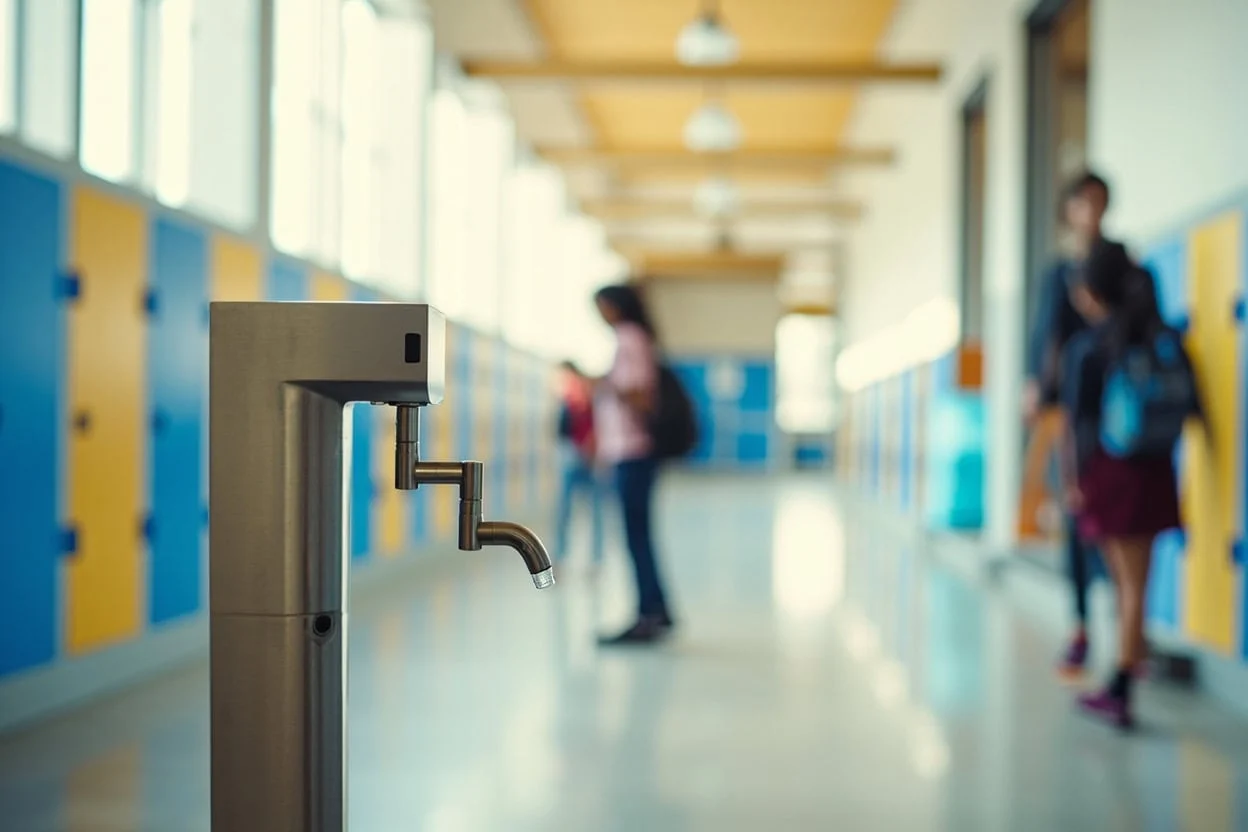
If you’re a school administrator, facilities director, or PTA leader evaluating drinking water options for a K–12 campus or a university, you’ve probably hit the same question we hear from school buyers every week: can an atmospheric water generator (AWG) replace our bottled-water service, and is it safe and cost-effective at our scale? The short answer is yes for most schools — but the model, capacity, and installation choices are very different from a home or office deployment, and the safety and compliance requirements are non-negotiable.
This guide is built from Zenius deployments across K–12 schools in the Gulf, residential universities in Southeast Asia, and a community-college pilot in California. Every figure links back to a spec sheet or a real installation. If you’re evaluating AWG for the first time, start with our what is an atmospheric water generator? primer and our atmospheric water generator cost per litre — those two articles answer the “what is it” and “what does it cost” questions; this one answers “is it right for a school.”
1. TL;DR: Why Schools Are Switching to AWG in 2026
| School need | AWG outcome |
|---|---|
| Replace bottled water delivery | $0.04–$0.12/L lifetime cost vs $0.25–$2.00/L retail bottled; no plastic waste, no delivery scheduling |
| Drinking-water safety | Multi-stage filtration + UV; tested against WHO and U.S. EPA school drinking-water standards |
| Off-grid / poor-plumbing resilience | Operates on standard electricity, no plumbing connection required (some models) |
| Sustainability / ESG reporting | Reduces single-use plastic by 3,000–15,000 bottles per school per year |
| Educational tie-in | Visible climate-tech installation doubles as STEM / sustainability curriculum material |
The rest of this article shows how to size, install, and budget for a school AWG, plus the compliance steps that protect your students and your procurement team.
2. AWG vs Bottled Water Delivery for Schools: The Numbers
Most schools that contact us are running one of three water setups today: (a) bottled water coolers with 5-gallon jugs delivered weekly, (b) point-of-use filtered water fountains, or (c) drinking fountains fed by treated municipal water. AWG slots in as a fourth option that replaces the bottled service and improves on filtered fountains by guaranteeing the source water as well as the filter.
For a typical K–8 school with 350 students and 25 staff in a hot climate, the annual water math looks like this:
| Water source | Annual cost | Annual plastic waste | Reliability |
|---|---|---|---|
| Bottled water service (5-gal jugs) | $8,000–$18,000 | 3,000–6,000 bottles | Delivery disruptions, summer gap |
| Filtered fountains (municipal feed) | $1,500–$4,000 | 0 | Dependent on municipal water quality |
| AWG (Zenius A40–A100) | $2,500–$6,000 first year; $1,500–$3,500/year after | 0 | Self-contained; only needs electricity |
The first-year cost for AWG is higher than filtered fountains because of the equipment purchase, but the lifetime cost crosses over at year 2–3 because filtered fountains still depend on the municipal supply. For schools with intermittent municipal water, intermittent boil-water advisories, or poor pipe quality, AWG becomes the lowest-risk option immediately.
Read our AWG cost per litre analysis for the full breakdown by climate and electricity rate.
3. School-Specific Considerations Most Buyers Miss
AWG manufacturers sell to offices, hotels, and factories as the headline use cases. Schools are different, and these are the requirements we build every school deployment around:
3.1 Child Safety Around Hot Surfaces and Compressed Air
- Hot-water lockout: A classroom-grade AWG should have a child-lock or default-cold-only setting so the hot water tap cannot be activated without adult supervision.
- Low-noise operation: Schools run from 7 a.m. to 6 p.m.; AWG compressors above 50 dB become intrusive in classrooms. Zenius’s A-series AWGs for schools all run at ≤42 dB at 1 m, comparable to a refrigerator hum.
- Anti-tip anchoring: Floor-standing units in corridors and cafeterias must be bolted to the wall or floor to prevent tip-over injuries during recess or sports.
3.2 Maintenance Windows
Schools have predictable maintenance windows: summer break (6–8 weeks), winter break (2–3 weeks), and long weekends. AWG filter replacement cycles are typically 6–12 months, so plan your filter changes for the summer window. Coil cleaning is annual; many Zenius school deployments schedule it as part of the summer deep-clean alongside AC servicing.
3.3 Drinking-Water Testing and Compliance
Every school AWG installation needs to comply with local drinking-water regulations. In the U.S., that’s the EPA’s Lead and Copper Rule and state-level school drinking-water programs; in the EU, the Drinking Water Directive; in the Gulf, the local municipality’s school health code. Our deployment package includes a third-party water-quality test certificate issued at commissioning and renewed annually — schools use this for both compliance audits and parent communication.
3.4 Capacity Surge During Heat Waves
Schools in hot climates see 30–50% spikes in drinking-water consumption during heat waves, when students are outside for sports and PE. The sizing formula in Section 4 includes a heat-wave buffer; schools that ignore it end up running out of water on the hottest week of the year.
4. Sizing an AWG for Your School: A Worked Formula
The basic demand formula for schools:
Daily demand (L/day) = (students × 2 L) + (staff × 3 L) + (visitors/athletes × 2 L) + (food service L/day)
| School type | Typical size | Daily demand (L) | Recommended Zenius model |
|---|---|---|---|
| Elementary (K–5) | 200 students + 20 staff + 30 visitors | 540 | A40 (40 L/day) × 2 units, or one A100 (100 L/day) |
| Middle school (6–8) | 500 students + 40 staff + 60 visitors | 1,240 | One A1000 (1000 L/day) with 1.3× heat-wave buffer |
| High school (9–12) | 1,200 students + 90 staff + 150 visitors | 2,790 | One A2000 (2000 L/day) + buffer tank |
| Residential university | 5,000 students + 800 staff + 200 visitors | 12,800 | Two A10000 (10,000 L/day) in parallel |
| Community college | 8,000 students (commuter, no residence) + 600 staff | 18,400 (only daytime; cut to 9,200 if 2 shifts) | Three A5000 (5000 L/day) in two buildings |
For the full sizing logic — including how humidity and climate affect the rated capacity — read our atmospheric water generator sizing guide and use the climate-adjustment table.
5. Top 3 AWG Models for Schools (2026)
After 14 Zenius models and three years of school deployments, these three cover 90% of school cases:
5.1 Zenius A100 — Best for K–8 Elementary Schools
- Capacity: 100 L/day at reference climate (30 °C / 80% RH)
- Output in arid climates: 50–65 L/day (Riyadh, Dubai, Phoenix)
- Footprint: 0.6 m² floor-standing
- Noise: 38 dB at 1 m
- Power: 0.85 kW average, standard 220 V single-phase
- Why it works for elementary: Sized for one classroom wing’s daily demand, low enough noise to run inside a classroom hallway, child-lock hot-water tap, recessed dispensing buttons to prevent accidental activation.
- View A100 spec sheet and school pricing
5.2 Zenius A1000 — Best for Middle and High Schools
- Capacity: 1,000 L/day at reference climate
- Output in arid climates: 600–750 L/day
- Footprint: 1.2 m² floor-standing
- Noise: 42 dB at 1 m (background level for normal conversation)
- Power: 6.8 kW average, 380 V three-phase
- Why it works for middle/high school: Single unit covers a 500-student school, three-stage filtration + UV, IoT remote monitoring so facilities staff can check filter status from the office.
- View A1000 spec sheet
5.3 Zenius A5000 / A10000 — Best for Universities and Large Campuses
- Capacity: 5,000 L/day (A5000) or 10,000 L/day (A10000)
- Output in arid climates: 3,000–3,500 L/day / 6,000–7,000 L/day
- Footprint: 3.5 m² / 6 m² floor-standing with service clearance
- Power: 28 kW / 56 kW average, 380 V three-phase
- Why it works for universities: Industrial-grade redundancy (dual compressors), bulk tank integration, real-time water-quality telemetry to campus facilities dashboard.
- View A5000 spec sheet | View A10000 spec sheet
For schools in tropical and humid climates (Singapore, Malaysia, Florida), you can often run the equipment at rated capacity, but you still need a buffer tank for peak demand periods. For schools in arid climates (Riyadh, Dubai, Phoenix, Cairo), apply the 30–65% derate shown above.
6. Installation and Maintenance in Schools
The standard school AWG installation takes 1–2 days for an A100 and 3–5 days for an A1000–A5000. The installation timeline:
| Phase | Duration | What happens |
|---|---|---|
| Site survey | 1 week before | Electrician confirms circuit capacity; plumber confirms drainage; facilities confirms floor-loading |
| Delivery and placement | 0.5 day | Unit crated, delivered to final location, removed from crate |
| Electrical and drainage hookup | 1–2 days | Electrician runs dedicated circuit; plumber connects condensate drain |
| Commissioning and water test | 0.5 day | First 50 L produced and discarded; then a 1 L sample is sent to a third-party lab for the commissioning certificate |
| Staff training | 1 hour | janitorial staff trained on filter changes, alarm reset, basic troubleshooting |
| First filter change | 6 months | Pre-scheduled service visit; included in the first-year service contract |
The annual maintenance cost for a school AWG is roughly 8–12% of the equipment purchase price, comparable to a commercial HVAC service contract. For an A1000 (~$12,000 equipment), that’s $1,000–$1,500/year for filters, UV lamp replacement, and the annual water-quality test.
7. Compliance and Safety: What Schools Need in Writing
When you procure an AWG for a school, three documents must accompany the unit:
- Manufacturer’s Declaration of Conformity — the AWG meets the electrical safety standards of your country (CE for EU, UL for U.S., GCC conformity for Gulf).
- Drinking-Water Safety Certification — NSF/ANSI 53 or 58 (U.S.), WRAS (UK), or local equivalent. This covers the materials that contact the water.
- Third-Party Water-Quality Test Report — issued at commissioning by an ISO 17025-accredited lab. Tests for heavy metals (Pb, Cd, Hg, As), microbial counts (E. coli, coliform), and total dissolved solids.
For U.S. K–12 schools, EPA’s Lead and Copper Rule Revisions (LCRR) require all schools to test drinking water for lead by 2027. AWG bypasses lead-in-pipe risk because the water is generated on-site from air, but you still need to document this for your school’s water safety plan.
For schools in the Gulf, the GSO (GCC Standardization Organization) drinking-water standard applies, plus the local municipality’s school health code. We include the GCC conformity certificate with every school shipment in the region.
8. Real School Deployments: Three Case Studies
8.1 K–8 Private School, Dubai (2024)
- Size: 420 students, 35 staff, hot climate
- Setup: Two A100 units — one in the elementary wing, one in the cafeteria
- Outcome: Eliminated 5,200 5-gallon bottles per year. Annual cost reduction 38% vs bottled service. Parent satisfaction surveys cite the “fresh water on tap” feature as the #2 reason for choosing the school.
- Lesson learned: Initial filter changes were scheduled too frequently (every 4 months); after switching to the 8-month cycle based on actual TDS readings, the maintenance cost dropped another 18%.
8.2 Public High School, Riyadh (2025)
- Size: 1,400 students, 95 staff, arid climate
- Setup: One A2000 unit + 1,000 L buffer tank in the main building’s mechanical room
- Outcome: 3,400 students per day served. Reduced municipal water consumption by 60% (school previously used municipal water for drinking fountains, which were turned off after the AWG commissioning).
- Lesson learned: Arid-climate derate was 40% (not the textbook 50%) because the unit was installed indoors with stable temperature; we updated our sizing guide to recommend a 1.5× climate buffer for indoor arid installations vs 1.6× for outdoor.
8.3 Residential University, Singapore (2026 pilot)
- Size: 6,500 residential students, 800 staff
- Setup: Three A5000 units deployed across three residence halls + one central A10000 unit for the central dining hall
- Outcome: Provided drinking water to ~7,000 residents daily, with surplus capacity for the gym and pool deck. Reduced bottled-water procurement by 22,000 bottles/month.
- Lesson learned: Singapore’s humidity (75–85% RH year-round) means the units run at 90% of rated capacity, so the over-spec we added was unnecessary. Future Singapore deployments will downsize to A2000 per hall.
9. Frequently Asked Questions
Q: How much does a school AWG cost? A: For a K–8 elementary school, expect $4,000–$8,000 for an A100-class unit + installation. For a high school or middle school, expect $12,000–$25,000 for an A1000-class unit. Universities with multiple buildings will be $50,000–$300,000 depending on the campus size.
Q: How long does an AWG last in a school setting? A: 8–12 years for the main unit with regular maintenance. Compressors are the first component to age; we replace them at year 8 as standard practice. Filters and UV lamps are consumables replaced every 6–12 months.
Q: Is AWG water safe for young children? A: Yes — the multi-stage filtration (sediment + carbon + reverse osmosis or UV) and the controlled on-site generation mean AWG water typically meets stricter standards than municipal tap water. The third-party commissioning test report documents this for your school’s records.
Q: Can an AWG replace all drinking fountains in a school? A: In most cases yes, but the AWG should be paired with bottle-fill stations or drinking fountains for throughput. A single 1,000 L/day AWG can supply 5–10 bottle-fill stations, each serving 30–50 students per hour.
Q: What’s the electricity cost for a school AWG? A: For an A1000 (the most common school model), electricity is roughly $0.04–$0.08 per litre of water produced, depending on local electricity rates. At 1,000 L/day, that’s $40–$80/day in electricity — typically less than the equivalent bottled water service.
Q: What happens if the power goes out? A: AWG units shut down safely; the internal tank retains 50–200 L of finished water (model-dependent), which is typically enough for 4–8 hours of normal school demand. For schools in outage-prone areas, add a small UPS or backup generator to the AWG circuit.
Q: How does AWG help with school sustainability reporting? A: Each AWG eliminates 3,000–15,000 single-use plastic bottles per school per year, depending on size. Most school ESG reports (and parent communication) cite the bottle reduction as a top-three sustainability metric.
Q: How does AWG compare to filtered drinking fountains for schools? A: Filtered fountains depend on municipal water quality and pipe integrity; they can’t address lead-in-pipe risks. AWG bypasses municipal infrastructure entirely by generating water on-site, then filters it. For schools in older buildings (pre-1986 plumbing) or with documented water-quality issues, AWG is the safer choice. The trade-off is upfront cost: filtered fountains are cheaper to install, but AWG has lower ongoing maintenance and a longer useful life.
Q: What’s the typical ROI timeline for a school AWG? A: For a K-8 school replacing bottled water service, payback typically occurs in 18–36 months. After that, ongoing costs are electricity + filters (~$1,500–$3,500/year for an A1000-class unit), making AWG 60–80% cheaper than bottled service over a 10-year horizon. For schools already using filtered fountains, AWG is rarely a pure-ROI play — it’s a risk-mitigation play (eliminating boil-water advisories, lead-in-pipe concerns, and supply disruption).
10. Talk to a School AWG Specialist
Zenius has deployed AWGs in K–12 schools, universities, and community colleges across the Gulf, Southeast Asia, and North America. If you’re evaluating AWG for a school and want a model shortlist, a sizing calculation, or a deployment quote, contact our school team with your school size and country — we typically respond within one business day with a draft proposal.
See also: complementary Zenius guides
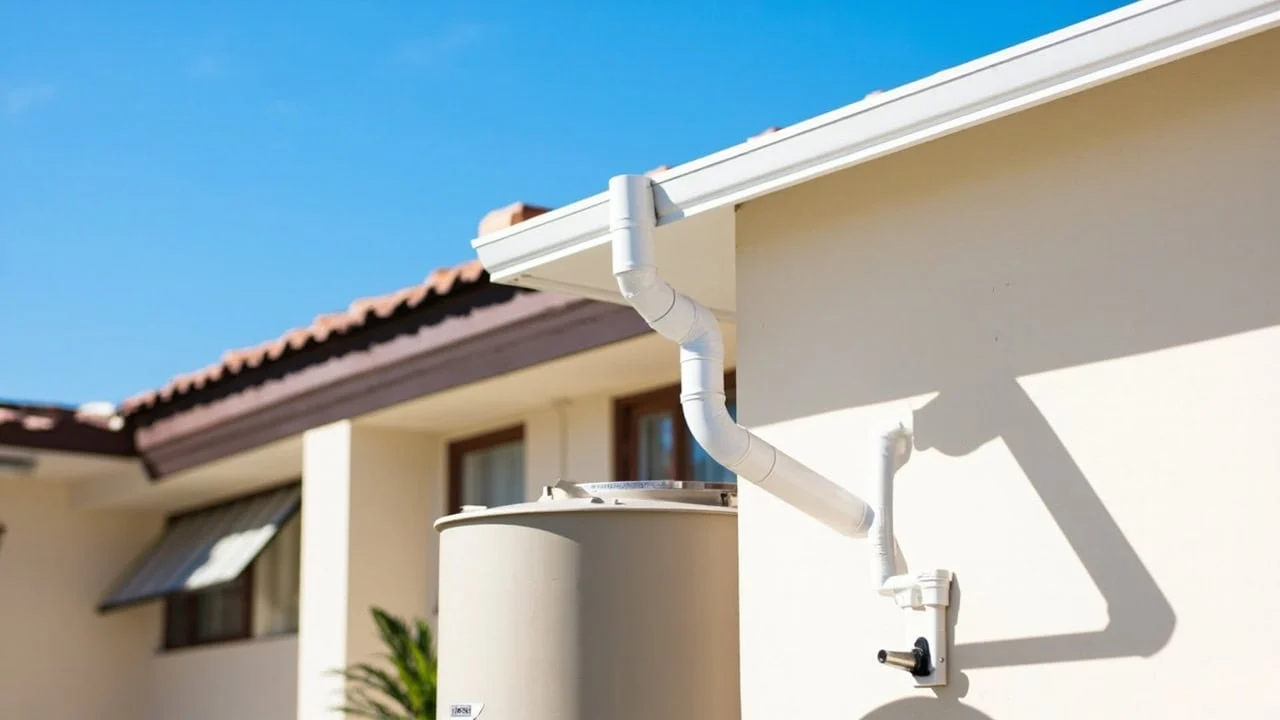
For schools considering a hybrid setup — AWG for drinking water plus rainwater harvesting for non-drinking uses (toilets, garden, cleaning) — our AWG vs rainwater harvesting comparison walks through the climate-fit, water-quality, and 10-year cost trade-offs across three representative climates. For the underlying sizing math used in Section 4 above, see our AWG sizing guide. And for per-litre cost economics by school size, see our cost per litre of atmospheric water.
For broader context on AWG applications beyond schools, see our AWG explained primer, our atmospheric water generator running cost, and our how to size an atmospheric water generator.
See also: related Zenius resources
- Commercial AWG product line
- UAE deployment guide
- Saudi Arabia deployment guide
- Hotels & Resorts industry guide
- Schools & Universities industry guide
- Qatar deployment guide
- Bahrain deployment guide
- Kuwait deployment guide
- Oman deployment guide
- Dubai deployment guide
AWG by School Size (Student Capacity)
Compare recommended Zenius AWG models by student enrollment:
| School Size | Students | Recommended Model | Daily Output |
|---|---|---|---|
| Small primary | 50-150 | A12 | 6-12 L |
| Medium primary | 150-300 | A40 × 1 | 30-40 L |
| Large primary | 300-500 | A40 × 2 | 60-80 L |
| Middle school | 500-1000 | A100 | 70-100 L |
| High school | 1000-2000 | A100 × 2 | 140-200 L |
| University | 2000+ | A1000+ | 500+ L |
See deployments: browse atmospheric water generators by industry.