Hangzhou Zenius New Energy Co., Ltd.
-
+86 158-8822-2598


From Deserts to Islands: The Unlimited Potential of Air Water Generator
In some places, conventional water supply is either too expensive or simply impossible. Imagine a remote island where all fresh water depends on shipping; a vast desert where groundwater is too salty to drink; a temporary disaster relief camp with no pipeline infrastructure. In these scenarios, air water generators (AWGs) offer a unique advantage: they require no existing water source — just air and electricity to produce safe drinking water continuously.
Reliable Water in Extreme Environments
One core strength of AWGs is their environmental adaptability. While temperature and humidity affect output, modern technology has greatly expanded their operating range. For example, ZENIUS’s GEN-M Pro model operates at temperatures above 15°C and relative humidity above 20%. This means it can work stably even in relatively dry or cool conditions. Under standard test conditions (30°C/80% RH), daily output ranges from 10 to 6,000 liters, meeting the needs of everything from a small family to a large community.
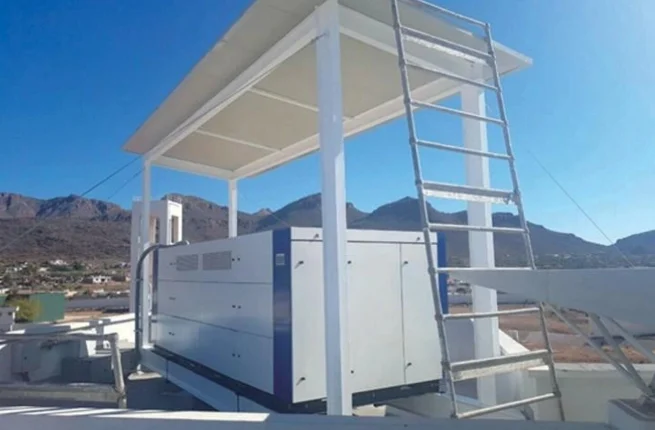
Mobile and Vehicle-Mounted Units: Rapid Emergency Response
After natural disasters, clean drinking water is often the most critical shortage. Floods, earthquakes, and hurricanes frequently destroy water systems and contaminate surface sources. Mobile AWG models (such as the M1, GEN-M, and MWT trailer unit) can be quickly transported to disaster zones. Without the need to find a water source or lay pipes, they only require a generator or connection to a temporary local grid to start producing water. These units typically include large storage tanks, ozone or UV sterilization, and can support hundreds of people with long-term drinking water.

Military and Border Outposts: Self-Sufficient Supply
For border outposts, military bases, or peacekeeping camps, supply lines are often vulnerable. Water is one of the heaviest and bulkiest supplies. AWGs can significantly reduce logistical pressure, allowing troops to “source water on-site.” Vehicle-mounted units can even be integrated into military vehicles or command trucks, greatly enhancing field self-sustainability.

Offshore and Marine Applications: Fresh Water Without Shipment
Offshore drilling platforms, ocean-going vessels, and island resorts have traditionally relied on either desalination (expensive and complex) or regular water shipments. AWGs offer an intermediate solution: simpler and more energy-efficient than desalination, with no brine discharge. As long as there is electricity on the platform, water can be produced continuously. For island communities, a mid-sized AWG can become the primary source of drinking water, reducing dependence on mainland supply and increasing water autonomy.

Agriculture and Livestock: From Drinking to Irrigation
Although AWGs are currently used mainly for drinking water, the technology is extending into agriculture. Some large industrial units are already being tested to supply water for greenhouses and livestock farms. In the future, as costs drop and efficiency improves, AWGs could become a supplementary water source for irrigation in dry areas, helping grow high-value crops or securing water for livestock.

Global Cases and Future Outlook
Many communities, schools, hospitals, and hotels in the Middle East, Africa, Latin America, and Southeast Asia have already installed AWGs. For example, some island resorts in the Philippines have replaced bottled water with AWGs, dramatically cutting costs for water shipping and waste disposal. In Chile’s Atacama Desert — one of the driest places on Earth — AWGs are providing drinking water for small communities, proving that even in the most extreme environments, the atmosphere holds life-giving moisture.
The future of AWG goes beyond drinking water. As technology matures, we may see it in more fields: providing high-purity water for hydrogen fuel cells in electric vehicles, supplying cooling water for data centers, irrigating vertical farms… It is moving from a “niche technology” to a mainstream solution, becoming a key piece in solving the global water crisis.
See also: related Zenius resources
- AWG cost-per-litre analysis
- 5-step AWG sizing guide
- AWG for schools guide
- AWG vs rainwater comparison
- AWG primer
- Household AWG product line
- Commercial AWG product line
- UAE deployment guide
- Saudi Arabia deployment guide
- Hotels & Resorts industry guide
- Schools & Universities industry guide
- Contact Zenius team
Expanded Analysis
This expanded analysis covers deployment considerations, comparisons, and decision frameworks for this technology in greater detail.
AWG in Arid and Desert Environments
Arid regions with humidity below 30% present the biggest challenge for AWG technology. Indoor AWG installations in arid environments produce 30-50% of rated capacity, requiring larger units for given demand. Best practices for arid deployments include: indoor placement with adequate ventilation, buffer tanks sized for 2-4 days of demand, and indoor-rated models designed for high-temperature operation. Successful arid deployments include hotels in Dubai, residential complexes in Riyadh, and military bases in desert environments.
AWG in Tropical and Coastal Environments
Tropical and coastal environments with humidity 70-85% are ideal for AWG technology. AWG output reaches 80-100% of rated capacity. Best practices for tropical deployments include: standard outdoor-rated units, protection from salt spray in coastal areas, and standard maintenance schedules. Successful tropical deployments include resorts in Singapore, hotels in Maldives, and residential complexes in tropical Australia.
AWG for Islands and Remote Coastal Communities
Islands and remote coastal communities often face water supply challenges due to limited freshwater sources and expensive desalination. AWGs offer an alternative that uses atmospheric humidity, which is abundant in coastal environments. Island deployments typically use larger units (5000-10000 L/day) with extensive buffer tanks (5000-10000 L) to handle demand variability. Examples include resort islands in Maldives, Caribbean cruise destinations, and Pacific island communities.
AWG for Mountain and High-Altitude Environments
High-altitude and mountain environments have variable humidity depending on season and weather. AWG deployments at altitude require careful climate analysis and may need seasonal capacity adjustments. Best practices include: buffer tanks sized for 3-7 days of demand, backup water sources for very dry seasons, and units designed for temperature variations.
AWG for Urban and Industrial Environments
Urban and industrial environments present both opportunities and challenges for AWG deployment. Urban air typically has higher humidity due to population density, vegetation, and water features. Industrial areas may have air pollution requiring enhanced filtration. Urban deployments often pair AWGs with building management systems for smart integration.
AWG for Emergency and Disaster Response
AWGs have proven valuable in emergency and disaster response scenarios where conventional water infrastructure is damaged. Portable AWG units can be deployed rapidly to provide emergency drinking water in disaster zones. The US military, UN agencies, and disaster response NGOs have used AWGs in various emergency deployments. AWGs offer advantages in disasters: rapid deployment, no infrastructure dependency, and continuous water production as long as electricity (or solar) is available.
The Future of AWG: From Niche to Mainstream
AWG technology has evolved from a niche technology in the 2000s to a mainstream water infrastructure option in the 2020s. The driving forces: growing water scarcity, plastic waste awareness, ESG pressure, and climate resilience concerns. By 2033, the AWG market is projected to reach $5.77 billion globally (Grand View Research). The technology is increasingly integrated with renewable energy systems, smart building management, and circular water economy concepts.
Frequently Asked Questions
Does AWG work in desert climates?
Yes. Indoor AWG installations in desert environments produce 30-50% of rated capacity. Outdoor installations produce 25-35%. Successful deployments include hotels in Dubai, residential complexes in Riyadh, and military bases in desert environments. Indoor placement with adequate ventilation is the standard practice.
Can AWG be used on islands?
Yes. Islands and remote coastal communities benefit from AWG technology, which uses abundant coastal humidity. Island deployments typically use larger units (5000-10000 L/day) with extensive buffer tanks. Examples include resort islands in Maldives and Pacific island communities.
How is AWG used in emergency response?
Portable AWG units can be deployed rapidly in disaster zones where conventional water infrastructure is damaged. The US military, UN agencies, and disaster response NGOs have used AWGs in emergency deployments. AWGs offer rapid deployment and no infrastructure dependency.
What is the future of AWG technology?
AWG market is projected to reach $5.77 billion by 2033 globally (Grand View Research). The technology is increasingly integrated with renewable energy, smart building management, and circular water economy concepts. The technology is moving from niche to mainstream as water scarcity, plastic waste, and climate resilience concerns grow.
Is AWG suitable for high-altitude deployment?
Yes, with careful planning. High-altitude environments have variable humidity. Best practices include buffer tanks sized for 3-7 days of demand, backup water sources for very dry seasons, and units designed for temperature variations.


