Hangzhou Zenius New Energy Co., Ltd.
-
+86 158-8822-2598


More Than Just Water: The Multiple Values of Air Water Generation
When we talk about air water generators, it’s easy to view them simply as “water extraction devices.” But in reality, their value extends far beyond providing drinking water. From reducing plastic pollution to lowering carbon footprints and improving indoor air quality, AWGs are quietly but profoundly reshaping our relationship with resources and the environment.
1. Reducing Plastic Waste, Alleviating White Pollution
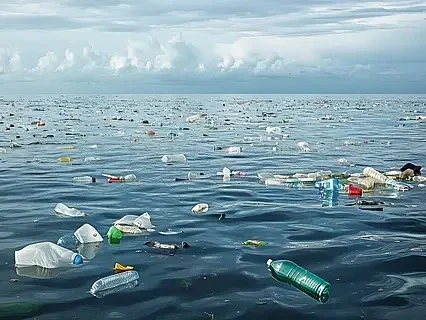
Approximately one million plastic bottles are sold every minute worldwide, and the vast majority end up in landfills or the ocean. These bottles take hundreds of years to degrade, releasing microplastics that contaminate soil and water. AWGs break the linear “buy – drink – discard” model by producing water on-site. A single home AWG can replace thousands of plastic bottles each year — a significant cumulative effect for a household, office, or community.
2. Saving Energy and Emissions from Water Transportation
Bottled and jugged water go through multiple stages: filling, packaging, warehousing, and transportation. Behind every bottle lies considerable fossil fuel consumption. AWGs produce water directly at the point of use, eliminating transportation entirely. Even tap water requires extensive pipeline networks and pumping stations. AWGs only need standard electricity, and many models now use inverter compressors and smart energy-saving modes to further reduce consumption.

3. Purifying Air While Producing Water
What many don’t realize is that AWGs must draw in large volumes of air to function. During this process, built-in air filtration systems (HEPA filters, activated carbon layers, etc.) efficiently remove dust, pollen, PM2.5, and even bacteria. This means an AWG also acts as an air purifier. In enclosed spaces like offices, bedrooms, or classrooms, it continuously improves air quality while providing drinking water — a dual benefit of clean water and clean air.

4. Flexible Adaptation to Diverse Needs, Enabling Precise Water Supply
Unlike centralized water systems, AWGs are a decentralized water solution. You can choose models with different daily outputs: desktop (10L/day), home floor-standing (20-40L/day), commercial (100-2000L/day), and industrial (up to 6000L/day or more). Portable, vehicle-mounted, and trailer-based units can be rapidly deployed in disaster relief, camping, military, and other special scenarios. This flexibility enables precise, efficient water resource management.

5. Smart Water Quality Monitoring and Remote Control
Modern AWGs commonly feature real-time TDS (total dissolved solids) monitoring, filter life reminders, leak alarms, and smartphone app control. Users can check water quality and machine status at any time. High-end models also support OTA firmware updates and predictive maintenance alerts, greatly lowering the barrier to use and ongoing maintenance costs.

6. Economic Viability: Lower Long-Term Cost Than Bottled Water
Although the initial investment in an AWG can be higher, the long-term cost per liter can be as low as RMB 0.14–0.28 (approximately 2–4 US cents), far cheaper than bottled or jugged water. For businesses, schools, hospitals, and other high-volume users, the equipment investment can be recouped within two to three years, after which the water is nearly free.
In summary, an air water generator is far more than a “water faucet.” It is an integrated device combining water treatment, air purification, intelligent control, and energy efficiency. Choosing it means not only adopting a new way to drink water but also embracing a more sustainable, responsible way of living.
See also: related Zenius resources
- AWG cost-per-litre analysis
- 5-step AWG sizing guide
- AWG for schools guide
- AWG vs rainwater comparison
- AWG primer
- Household AWG product line
- Commercial AWG product line
- UAE deployment guide
- Saudi Arabia deployment guide
- Hotels & Resorts industry guide
- Schools & Universities industry guide
- Contact Zenius team
Expanded Analysis
This expanded analysis covers deployment considerations, comparisons, and decision frameworks for this technology in greater detail.
AWG as a Sustainable Infrastructure Investment
AWGs are more than water production equipment — they represent a sustainable infrastructure investment that delivers multiple values beyond drinking water. Commercial deployments reduce single-use plastic waste by 80,000-1,000,000+ bottles per facility annually. This plastic reduction contributes to corporate sustainability goals and ESG metrics. Many hotels, schools, and corporate campuses use AWG deployments as part of their sustainability marketing and reporting, generating positive brand perception and stakeholder engagement.
AWG and Climate Resilience
Climate change is increasing water stress in many regions. AWGs offer climate-resilient water production by extracting moisture from atmospheric humidity, which is more stable than rainfall patterns in many areas. In regions experiencing drought or unreliable municipal water, AWGs provide water security independent of rainfall or reservoir levels. For businesses operating in water-stressed regions, AWGs are a strategic resilience investment.
AWG and Energy Efficiency
AWGs use 0.3-0.6 kWh per litre in humid conditions and 0.8-1.2 kWh per litre in arid conditions. For comparison, desalination uses 3-6 kWh per litre, and bottled water delivery uses 2-5 kWh per litre including production, transport, and refrigeration. AWGs are 5-10x more energy-efficient than desalination and 3-7x more efficient than bottled water delivery, making them an energy-efficient choice for water production.
AWG and ESG Reporting
For companies reporting on Environmental, Social, and Governance (ESG) metrics, AWG deployments deliver measurable impact: water security (SDG 6), reduced plastic waste (SDG 12), reduced carbon footprint (SDG 13), and educational value (SDG 4). Many companies cite AWG deployments in their ESG reports and sustainability communications as concrete examples of sustainable infrastructure investment.
AWG and Brand Value
Hotels and resorts with AWGs can market their sustainability story to eco-conscious travelers. Schools with AWGs demonstrate environmental leadership to parents and communities. Corporate campuses with AWGs show employee commitment to sustainability. The brand value of AWG deployment is increasingly recognized as a differentiator in competitive markets where sustainability matters to customers, employees, and stakeholders.
AWG and Operational Cost Reduction
Beyond sustainability, AWGs reduce operational costs. Hotels save $30,000-100,000/year on bottled water procurement. Schools save $8,000-20,000/year. Corporate campuses save $10,000-50,000/year depending on size. These cost savings fund other sustainability initiatives or improve financial performance. The 18-36 month payback period is typically well within the planning horizon of facility managers and CFOs.
Frequently Asked Questions
What are the multiple values of AWG beyond drinking water?
AWGs deliver value beyond water production: sustainability (plastic waste reduction), climate resilience (water security independent of rainfall), energy efficiency (5-10x more efficient than desalination), ESG reporting impact, brand value (sustainability marketing), and operational cost reduction ($8K-100K/year depending on facility size).
How does AWG help with ESG reporting?
AWG deployments contribute to multiple UN Sustainable Development Goals: SDG 6 (clean water), SDG 12 (responsible consumption), SDG 13 (climate action), and SDG 4 (education). Companies cite AWG deployments as concrete sustainability investments in ESG reports.
Is AWG a good climate-resilience investment?
Yes. AWGs extract moisture from atmospheric humidity, which is more stable than rainfall in many regions. In drought-prone or water-stressed areas, AWGs provide water security independent of rainfall or reservoir levels.
How much can hotels save by deploying AWG?
A 100-room hotel eliminates 80,000-150,000 plastic bottles annually and saves $30,000-100,000 per year in bottled water procurement. Payback period is 18-30 months. After that, ongoing operating costs are 60-80% lower than bottled water.
Does AWG deployment improve brand value?
Yes. Hotels and resorts can market sustainability to eco-conscious travelers. Schools demonstrate environmental leadership to parents and communities. Corporate campuses show employee commitment to sustainability. The brand value of AWG deployment is increasingly recognized as a differentiator.